
The Most Expensive Trading Mistake Nobody Talks About | Alignment in Trading
Most traders don’t fail because of bad strategies. They fail due to misalignment between temperament, risk, and approach. Article 1 of the Alignment in Trading series.
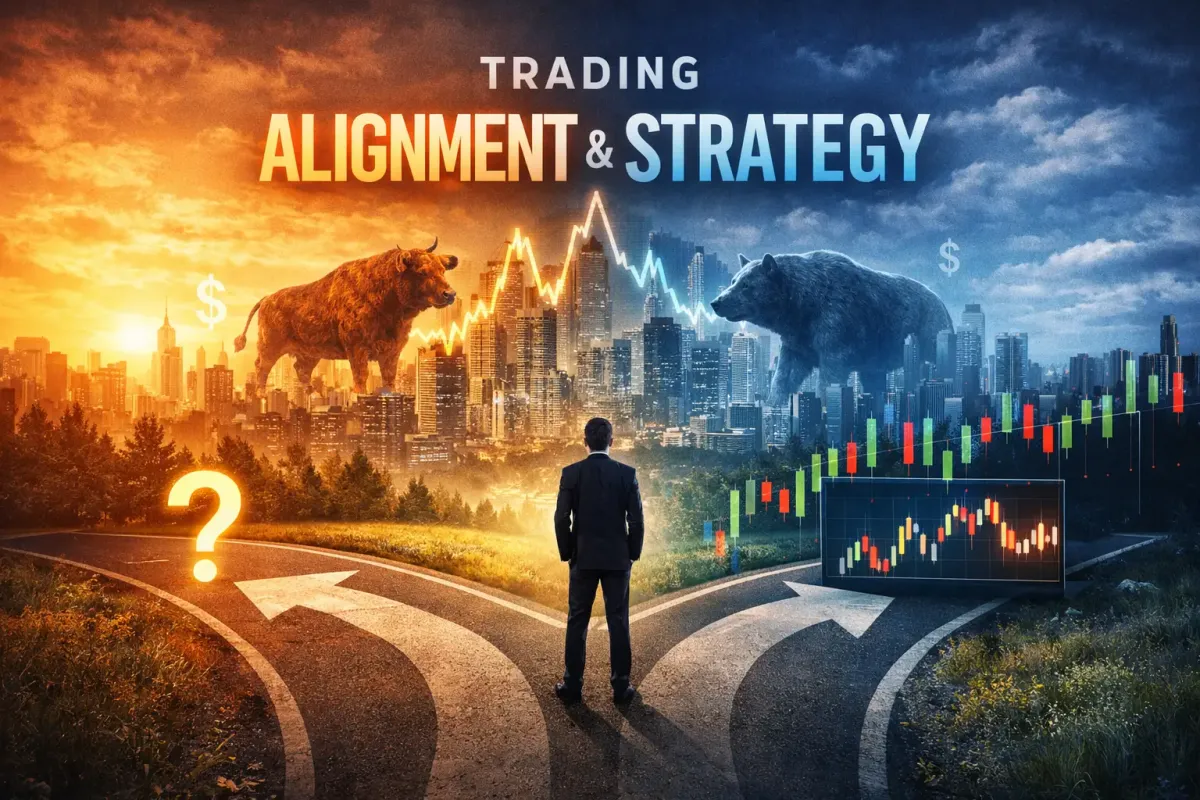
Most trading mistakes are easy to identify in hindsight.
Overtrading, ignoring risk limits, chasing momentum, or holding losing positions longer than planned -these are visible errors. They’re discussed often, analysed endlessly, and corrected repeatedly.
Yet many traders continue to struggle even after fixing these obvious issues.
That’s because the most expensive mistake in trading is rarely visible on a chart.
Confusing Emotional Comfort With Correctness
In uncertain environments like markets, the human mind naturally looks for safety.
That safety often shows up as familiarity - strategies we’ve used before, timeframes that feel manageable, positions that don’t disturb our sleep. Over time, traders begin to prefer decisions that feel comfortable, even if they haven’t examined why.
There’s nothing wrong with wanting comfort.
The problem begins when comfort is mistaken for correctness.
Why Comfort Feels So Convincing
Comfort creates a sense of control.
When a trade feels familiar, anxiety reduces. When decisions fit neatly into daily routines, stress feels manageable. When losses are smaller or slower, they feel tolerable - even if the underlying risk isn’t truly lower.
This emotional relief can quietly reinforce poor alignment.
The market doesn’t reward what feels good.
It rewards what works within the constraints of reality.
Comfort Is Not the Enemy - Misalignment Is
Markets don’t punish fear by itself.
They punish misalignment — when the way you participate in the market doesn’t match your temperament, your time availability, or your tolerance for uncertainty.
Two traders can follow the same strategy.
One feels calm and focused.
The other feels constantly tense and reactive.
The difference is rarely intelligence or effort.
It’s alignment.
The Quiet Cost of Ignoring Alignment
When comfort is prioritised over alignment, the damage rarely happens overnight.
It happens slowly.
Rules begin to bend during stressful periods.
Risk limits expand subtly after small successes.
Losses start feeling personal instead of probabilistic.
Many traders don’t fail dramatically.
They erode.
Why This Mistake Is Hard to Notice
This mistake is hard to spot because it feels rational.
From the inside, it sounds like:
- “This suits my lifestyle better.”
- “I feel calmer trading this way.”
- “At least I’m not stressed anymore.”
But calmness without alignment often leads to complacency, not consistency.
Comfort can hide friction until the next difficult market phase exposes it.
A Reflection Worth Doing
Instead of asking, “Is this strategy good?”, pause and ask:
- Does this way of trading energise me or drain me?
- Can I follow this approach consistently during losses?
- Does this require emotional behaviour I have to force?
- Can I imagine doing this for the next two or three years?
Honest answers matter more than perfect ones.
What Real Progress Often Looks Like
Progress in trading doesn’t always come from adding more tools, strategies, or information.
Often, it comes from choosing less, but choosing it correctly.
When your approach fits you:
- discipline feels natural, not forced
- patience feels possible, not painful
- confidence grows quietly, without bravado
That’s not luck.
That’s alignment.
A Closing Thought
Markets don’t need you to be fearless.
They need you to be honest — about who you are, how you think, and what kind of uncertainty you can sustainably handle.
Everything else builds on that foundation.
A resource, if this resonates
If the idea of alignment before action resonates, I’ve organised these reflections into a short clarity framework called “Which Kind of Trader Are You?”.
It’s not a strategy guide and it doesn’t offer setups or shortcuts.
It simply helps you think clearly about how you participate before committing more time or capital.
You can find it here👇
Read it only if clarity feels more useful than speed.
Author’s Note
I’ve spent years observing traders across different market cycles - not just how they trade, but how they think, react, and adapt when things don’t go as planned.
What stood out wasn’t a lack of intelligence or effort.
It was how often capable people struggled because the way they participated in markets didn’t match who they were.
These articles aren’t meant to provide answers or strategies.
They’re meant to slow the conversation down - just enough to ask better questions.
If any of this resonates, take it as an invitation to reflect, not rush.
Clarity tends to compound better than activity.
- Sachin Sival
Founder, Replete Equities
Writing about market behaviour, alignment, and sustainable decision-making
Comments ()